|
1
|
- v King’s College 2004 v
Mistress Gunnvör sílfrahárr
|
|
2
|
- Overview
- Sources
- Terminology
- Construction of O.N. Personal Names
- Construction of O.N. Patronymics
- Construction of O.N. Bynames
- Constructing an O.N. Name for Registration
- Documenting an O.N. Name for Registration
|
|
3
|
- Dates of the Viking Age
- ca. 793AD to 1066AD
- Exact dating depends on location, some areas preserved a Viking Age
culture until almost 1300
|
|
4
|
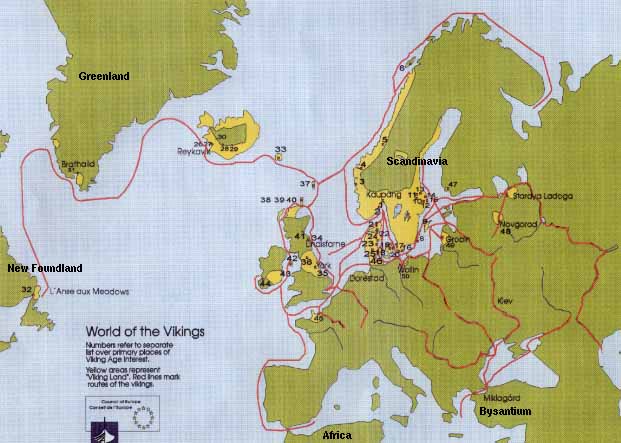
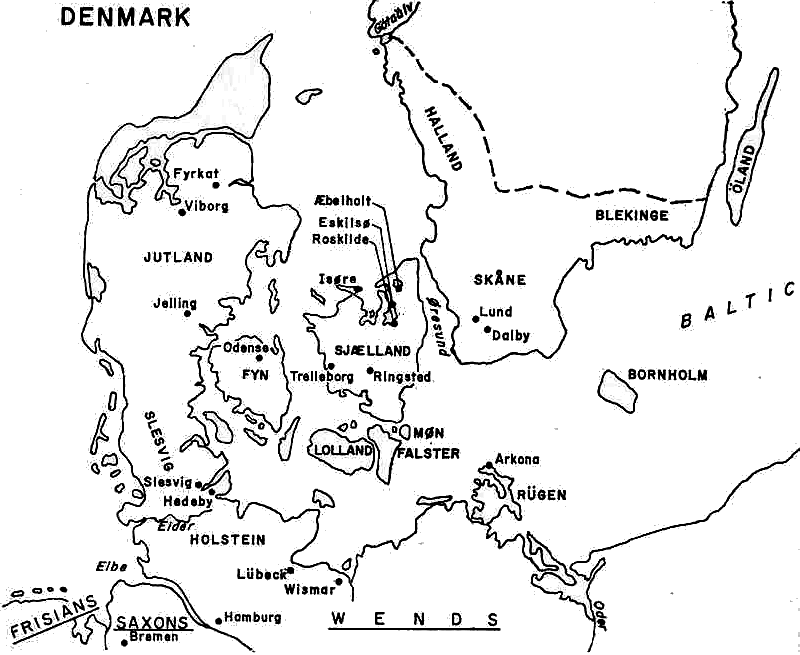
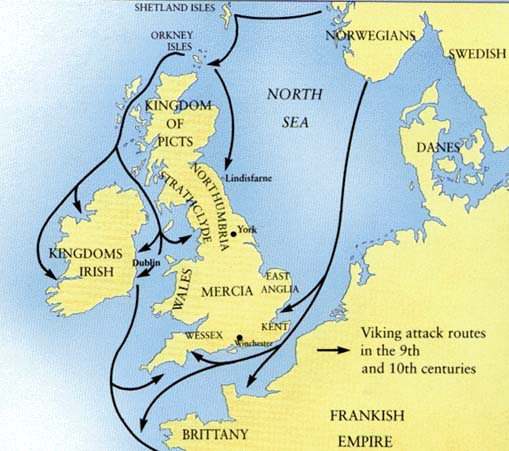
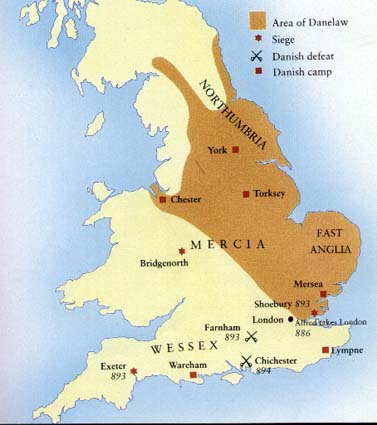
- What countries are involved
- East Scandinavia: Denmark, Sweden, Scandinavian colonies in the Baltic
and Russia
- West Scandinavia: Norway, Iceland, Greenland, colonies in the British
Isles (Ireland, the Western Isles, Scotland, etc.)
|
|
5
|
|
|
6
|
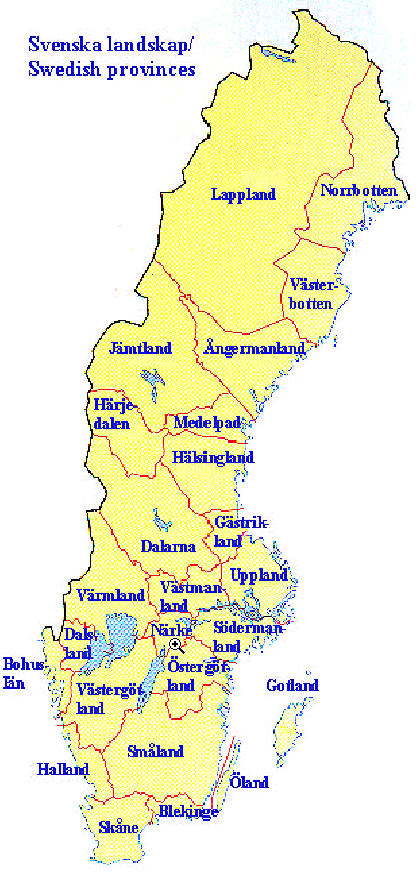
- Swedish Provinces
- Ån = Ångermanland
- Bo = Bohuslän
- D = Dalarna
- Ds = Dalsland
- G = Gotland
- Gs = Gästrikland
- Hr = Härjedalen
- Hs = Hälsingland
- J = Jämtland
- La = Lappland
- Nä = Närke
- Me = Medelpad
- Ög = Östergötland
- Öl = Öland
- Sm = Småland
- Sö = Södermanland
- U = Uppland
- Vg = Västergötland
- Vr = Värmland
- Vs = Västmanland
- Sv = other Swedish locations
|
|
7
|
|
|
8
|
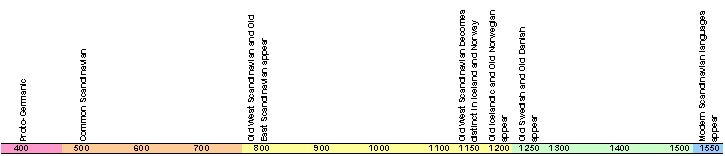
- The Germanic peoples were a branching from the old Indo-European stock,
and had a major series of migrations ca. 400-600AD. These peoples spoke
a language scholars call "Proto-Germanic".
- As they migrated, this root Germanic language differentiated into three
branches: East Germanic, which gave rise to the now-extinct Gothic
language; West Germanic, which gave rise to Old English, Old High German
and Old Low German; and North Germanic, which was the language of the
Germanic tribes that settled Scandinavia.
|
|
9
|
- Old West Norse vs. Old East Norse
- From the start of the Viking Age (ca. 800 A.D.) there began to be
noticeable differences in pronunciation between Norway and the Norse
colonies in the North Atlantic vs. Sweden, Denmark, and colonies in the
Baltic. These differences are
enough that scholars recognize two dialects of Old Norse, Old West
Norse (Norway, Iceland, Greenland, etc.) and Old East Norse (Sweden,
Denmark). There still wasn't a
lot of difference, it was more like the difference between British
English vs. American English.
- Continental Languages Cause Changes in Old East Norse
- Over time, Sweden and Denmark had a lot of direct trade and influence
from the Continent, particularly from Germany, and these influences led
to changes in pronunciation. Norway saw some changes in its language,
but Icelandic (far away in the Atlantic) changed very little. By 1250
A.D. or so, the Scandinavian languages had diverged enough that one can
term them from this point Old Icelandic, Old Norwegian, Old Swedish,
and Old Danish.
|
|
10
|
- Evolution of Old Norwegian, Old Icelandic, Old Danish, and Old Swedish
- In the later Middle Ages - say from the Black Death to the Reformation,
roughly 1350-1550 - the Continental Scandinavian languages underwent
significant changes. In all of them the original complex inflectional
system was greatly simplified.
- Old Norwegian ceased to exist as a written standard in the late 14th
century, when Norway came under Danish control, though the rural spoken
dialects continued to develop normally.
- Old Danish and Old Swedish were greatly influenced by Middle Low
German, the language of the Hanseatic League. Old Icelandic was
exceptional: its pronunciation changed significantly during this
period, but isolation and a strong and strongly conservative native
written tradition preserved the written language almost unchanged.
|
|
11
|
- Modern Norwegian, Icelandic, Danish and Swedish
- From about the middle of the 16th century on we can speak
simply of Icelandic, Danish, and Swedish; all three written languages
were by then much like their modern counterparts, just as Shakespeare's
English is recognizably modern compared with, say, Chaucer's Middle
English.
- In Norway the situation was different, thanks to Danish rule. The
written language was essentially contemporary Danish, and the spoken
language of the elite was heavily influenced by the written standard.
When Danish rule of Norway ended in the early 20th century,
this Dano-Norwegian mixture was codified as a standard language. Its
contemporary descendent, called bokmål 'book language', is one of the
two modern standard Norwegian languages and is the standard of a
majority of Norwegian school districts. The other standard, called nynorsk
'new Norwegian', was created in the mid-19th century by Ivar
Aasen. Roughly speaking, it is a reconstruction of what Old Norwegian
might have become had it developed with much less outside influence,
based especially on the conservative western dialects of spoken
Norwegian. The official bokmål and nynorsk standards converged
noticeably during the 20th century, but significant
differences remain.
|
|
12
|
- Runes and Runestones
- What are runes?
- Runic script comprises a family of related writing systems. Runes have
been used from at least the 2nd century AD to the 16th
century.
- Runic inscriptions appear both on large stones and on portable
objects. The runic alphabet of the Germanic world is called the futhark,
which is simply the first six letters of this alphabet pronounced in
sequence. The individual letters are referred to as runes.
- Runic alphabets
- Before the Viking Age: Elder Futhark (24 runes, ca. 0 to c.650 AD)
- Viking Age: Younger Futhark (16 runes, Danish and Swedish-Norwegian
variants exist, dating c.650-ca.1050)
- Medieval Futhork: (27 runes, c. 1050 to c. 1400). Latin script had
completely replaced the runes by the end of the third period.
|
|
13
|
- Rundata and the inscription codes
- Rundata is a huge database of runic inscriptions, in Swedish,
containing many names in their original spellings.
- Each inscription has a scholarly code, or signum, composed of letters
representing the inscription’s find location and a number.
- Caveats - problems in interpretation
- Lack of a coherent standard orthography.
- Imperfect preservation such as missing pieces or defacement.
- Transliterations from runes don't necessarily reflect the spoken
language at the time.
- Caveats - problems in dating
- No carbon dating possible.
- Letter forms and linguistic clues one source of dating.
- Associated archaeological finds may help in dating.
|
|
14
|
- Landnámabók
- Survives in five redactions, the earliest two being Sturlubók, composed
by Sturla Þórðarson (d. 1284) and Hauksbók, written by Haukr Erlendsson
in 1306-1308. An account of the
discovery and settlement of Iceland, deals with roughly 430 settlers,
their families and their descendants, preserving over 3,500 personal
names and almost 1,500 farm names. Many sagas rely upon Landnámabók as
a source for genealogical and biographical information.
- Snorri Sturluson’s Heimskringla
- The Heimskringla of Snorri Sturluson, written in Old Norse ca. 1225, is
a collection of sagas concerning the various rulers of Norway, from
about 850 to 1177 AD. Although the early sections especially draw very
heavily on Old Norse mythological materials and there is a consistent
blurring of fiction and fact, Heimskringla is still considered an
important original source for information on the Viking Age, a period
which Snorri covers almost in its entirety.
|
|
15
|
- Sagas are the prose literature of Medieval Scandinavia, with most being
composed in Iceland. They represent a type of historical fiction or
romance, not history.
- Sub-genres and dates:
- Postola sögur ("apostles' sagas") - the earliest sagas,
beginning ca. 1150
- Konungasögur ("kings' sagas) - ca. 1190-1230
- Íslendingasögur ("sagas of the Icelanders") - most composed
in the 13th c.
- Riddarasögur ("knights' sagas") - prose adaptions of
European romances - 1226 and later
- Fornaldarsögur ("sagas of ancient times") - most 14th
c., Saxo based portions of his work on these stories in the 13th
c.
- Caveats
- The transition from oral history to written history
- Romance and märchen elements appearing in sagas
- Issues with literature in translation: translation and normalizing
|
|
16
|
- There are a variety of chronicles, histories, and Church documents in
Latin that touch upon the Vikings.
The best-known include:
- Adam of Bremen's Gesta Hammaburgensis ecclestia pontificium, written
sometime between 1066 and 1080, recounts early Danish history from 845
to 1072. Adam was most
interested in showing the power and success of the Church and the
Church hierarchy, and thus distorts his history appreciably to
emphasize his concerns.
- Saxo Grammaticus' Gesta Danorum was completed around 1216, and begins
with legendary and mythological materials based on oral accounts from
traveling Icelanders, and also relies upon histories such as the one by
Danish historian Sven Aggeson, a few years earlier. Scholars have shown, however, that
Vergil's Aeneid had more influence on Saxo than did Aggeson. Saxo's account is both augmented and
distorted by the northern legendary materials.
- Caveats
- The transition from oral history to written history
- Problems with backformation from Latin records
- Issues with literature in translation: translation and normalizing
|
|
17
|
- The Anglo-Saxon Chronicle
- Compiled ca. 890 to mid-12th century, the ASC exists in a
number of Old English manuscripts. Many entries cite the Viking attacks
and incursions into Britain.
- Arabic Sources
- At least 50 Arabic authors in the Golden Age of Arabic literature
(750-1055) and the Silver Age (1055-1258) offer information about
Scandinavia and its inhabitants.
Arabic sources refer to the Vikings as ar-Rus or ar-Rusiya in
Russia and the east, and as al-Majus in writings from Andalusia, North
Africa and elsewhere in the west, with mentions of Warank (O.N. Varangians)
and al-Urman (Latin Nordmanni) elsewhere. These accounts consist of
geographies, traveler's accounts, and histories.
|
|
18
|
- Personal name
- The particular combination of sounds employed as the individual
designation of a single person. For the Norse, this was a name given to
a person at birth or in a naming ceremony. Synonyms: anthroponym, given
name, first name, forename, Christian name, baptismal name.
- Byname
- A byname (Old Norse upphefni, viðurnefi) is a name other than a
person's personal name. "Byname" is a broad term that may
include patronymics and various epithets. Bynames were a very common
way to tell one person from another with the same given name in period.
The pool of available given names was quite small by modern standards,
and even in the smallest villages there were bound to be several people
named Óláfr or Björn or Þórvaldr. Bynames were formed from all sorts of
words and frequently described some physical or social aspect of the
person bearing them, and were often not at all complimentary. In
period, they were usually comprised of a short, descriptive word or
phrase. Synonyms: appellation, eke name, nickname, epithet, sobriquet.
- Patronymic
- A type of byname given to offspring to indicate the name of the father.
- Matronymic
- A type of byname given to offspring to indicate the name of the mother.
- Diminutive name
- A shortened form of the given name, e.g., Beth and Liz are diminutives
of Elizabeth.
|
|
19
|
- Placename
- A placename is a geographical name, the proper name of a locality,
region, or some other part of the earth's surface or its natural or
artifical feature.
- Locative byname
- Locative bynames are related to placenames; they are bynames involving
locations or places. There are two types of locative bynames. The first are toponymic locative
bynames, which involve proper names of locations, including territorial
locative bynames, which indicate places held/owned by the person or
their family. The second are topographic locative bynames, which
involve descriptions of places rather than placenames.
- Grammatical terms
- Nominative - Subject. Used as the name itself.
- Genitive - Possessive. Most important for forming patronymics.
- Dative - Indirect object of verb or object of a preposition.
- Accusative - Direct object of verb or object of a preposition.
- Normalized
- A normalized spelling is the theoretically correct spelling according
to the rules for the period under consideration rather than the most
common spellings actually found in historical records. The normalized
form of the name is the form generally used by scholars. Old Norse
normalization is based on the forms most commonly found in the early
Norse literature, which dates from the 12th century. This
scholarly practice is based on the Old Icelandic of the sagas.
|
|
20
|
- How the Viking Age peoples selected names
- Based on recent lineage and recent deceased near kin
- A child was always named after a dead family member, ideally a direct
forefather, but also paternal or maternal aunts or uncles,
great-aunts, or great-uncles. When a close relative died shortly
before the birth of a child, particularly while the child is in utero,
the child was always given the name of the deceased. A son born after
the father dies was always given the name of the father. When the
person-being-named-after has a common name, the child is given the
person-being-named-after's byname as well as the personal name.
- Older practices
- Alliteration (the same sound at the beginning of one name is repeated
in another). Agni, Alrek, Yngvi, Iörund, Aun, Egil, Óttar, Adils,
Eystein, Yngvar, Önund, Ingiald, Olaf were successive kings of the
Uppsala dynasty, all with names beginning with a vowel.
- Variation (new name differs from that of others in the family by
changing one element in the name). A ninth-century Norwegian Végeirr
had sons Vébjörn, Vésteinn, Véþormr, Vémundr, Végestr
|
|
21
|
- Viking Age peoples didn't select names based on meaning
- Etymology looks at ancient word roots, meaning not always transparent
- From E.G. Withycombe, The Oxford Dictionary of English Christian Names
(3rd ed., Oxford: Oxford University Press, 1988, pp. xiv-xvi):
"Of the great Indo-European family of languages the
general principle was also that of one name for each individual, the
majority of names being compounded of two elements chosen from a stock
of special name-words, Such elements were naturally for the most part
words of good augury, but they seem, in most languages, to have been
combined with no particular regard for meaning. As Professor Stenton
writes: 'Most compound names can be translated, but the translations
often make nonsense. The men who coined the names Frithuwulf
(peace-wolf), and Wigfrith (war-peace), were not concerned about their
meaning. These are ancient names and they prove that at an early time
the sense which a compound name bore was a matter of little
importance... in most cases personal or family reasons determined the
choice of a name, and speculation as to its meaning, if it came at all,
came as an afterthought.' ...
The special name-words of which personal names were composed
were originally ordinary significant words, but with the passage of
time some of them fell out of use in the spoken language, and others
underwent phonetic and semantic changes to which personal names were
not always subject... The Frankish monk Smaragdus, who wrote at the
beginning of the 9th century, shows that even as early as
that there was no longer a clear understanding of the formation and
meaning of Germanic names: thus he translated Uuilmunt ('will' +
'protection') as volens bucca (‘willing mouth’), and Ratmunt ('counsel'
+ 'protection') as consilium oris (‘counsel of the mouth’), confusing mund
'protection', with mund 'mouth'. The short uncompounded names were
naturally even less comprehensible than the compounded ones; Redin
lists 736 such names in Old English, of which he classes 338 as
intelligible and 398 as unintelligible."
- A note on meaning being important to modern SCA folk and how to use it
as a tool to guide clients towards documentable, authentic names.
|
|
22
|
- Single element names vs. compound, two-element names
- Name elements not "mix and match"
- RFS II.3
- Some name elements only found in first position, others only in second
- Some name elements gender-specific
- Invented names not the best historical recreation
|
|
23
|
- Patronymics were overwhelmingly the most common type of byname in use in
Old Norse
- Patronymics (or matronymics) must follow the ordinary rules of Old Norse
grammar. In modern English, when we want to indicate a possessive
(sometimes also known as the genitive case of the noun) we do so by
adding an ending (the possessive of John is John's) or else we use a
phrase that indicates the possessive (of John). So in modern English,
when we want to indicate a son belonging to John, we say John's son or the
son of John
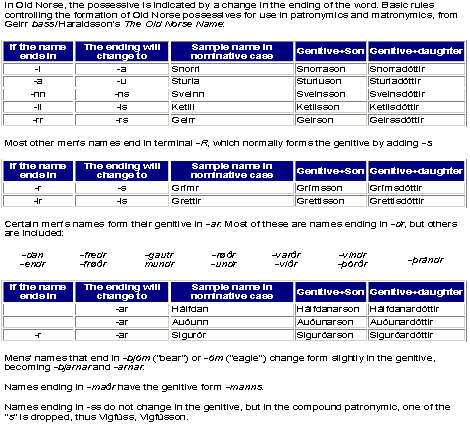
- In Old Norse, the possessive is indicated by a change in the ending of
the word.
|
|
24
|
- Basic rules controlling the formation of Old Norse possessives for use
in patronymics and matronymics, from Geirr bassi Haraldsson's The Old
Norse Name:
|
|
25
|
- While people did occasionally bear matronymics it was extremely
uncommon. There were a total of only 34 women in Iceland whose sons used
their mother's name as a matronymic, and most of these lived in the
northern and western districts of Iceland, including:
- Eilif Guðrunarson
- Hrafn Guðrunarson
- Stein Herdísarson
- Bersi Skald-Tórfuson
- Kormak Dolluson
- Ofeig Jarngerðsson of Skarð
- From the Academy of St. Gabriel:
- The daughter of Ragnhildr would have been known as Ragnhildar dóttir...
Ragnhildar was the genitive (possessive) form of Ragnhildr. Metronymics (surnames that identified
someone as her mother's daughter) were far less common than
patronymics, but they were used in least some parts of the Viking
world. (See http://www.s-gabriel.org/2708)
- There was also a feminine name Hildr that was common in tenth-century
Iceland. Its possessive form was
Hildar, and in principle the byname Hildar dóttir ‘daughter of Hildr’
is possible. In practice, however, metronymics -- names identifying the
bearer's mother -- were very rare in Iceland, and we don't recommend
this alternative.
(See http://www.s-gabriel.org/2769)
|
|
26
|
- Occasionally a person will be identified not only with a patronymic, but
the grandfather will also be identified in the name. In such a case, the
name of the grandfather occurs in the genitive (possessive) form, but
the suffix meaning “son” also is in the genitive case, appearing as –sonar.
- Þórfinnr Sigurðar son Þórsteins sonar
(Thorfinnr, son of Sigurðr, who was Thorsteinn’s son)
(See http://www.s-gabriel.org/1990)
- Two of the settlers of Iceland were identified in later writings as Þórvalldr
Asvalldz son, "Thorvalldr Asvalldr's son," and Olver en hviti
son Osvallz Auxna-Þóris sonar, "Olver the White, son of Osvaldr
Auxna-Thorir's son".
(See http://www.s-gabriel.org/2743)
- There are also examples of men identified as the grandsons of their
grandfathers, e.g. Hrilfi son Ásgeirs Bjarnar sonar, "Hrilfli, son
of Asgeirr Bjorn's son"...
Note that in this case, the father's entire name and byname are
in the genitive (possessive) case.
(See http://www.s-gabriel.org/2516)
|
|
27
|
- It was very uncommon for a husband and wife to share a surname in [the
Viking Age]. A woman did not
adopt her husband's surname upon marriage, so she would have the same
surname only if it were a correct description of her as well as of
him.
(See http://www.s-gabriel.org/1919)
- ... you might have been known by a name which identified you as his
wife. Unfortunately, we have
relatively little Swedish data from your period, and all of our Swedish
examples of this type of byname are from the 15th and 16th
centuries. We do, however, have a
handful of examples from Norway ca.1300, e.g., Ragnillde þoralfs kono
1289, Gudrune Eilifs kono 1282, and Bergliot Vþyrms kona ca.1300. We
therefore think it very plausible that you might have been known by your
husband's name in the genitive (possessive) case and kona 'woman, wife'.
(See http://www.s-gabriel.org/2512)
[Note: Bold emphasis mine.]
- A woman might occasionally be known as her husband's wife, but you
shouldn't think of this as a married name in the modern sense. It's more accurate to call it an
alternate description. Lina the
wife of Úlfr ... could have been known as Lina Úlfs kona... However, in
other contexts she would have been identified by a patronymic, e.g. Lina
Snorradóttir.
(See http://www.s-gabriel.org/1493)
- ... Scandinavian bynames are typically patronymic, identifying the
bearer as a child of his or her father, and a spousal byname would at
least be quite unusual. We did
find a handful of examples; Þoralfs kona 1289 'Thoralf's wife' and Eilifs
kona 1282 'Eilifr's wife' are quite typical... These are Norwegian, but in Denmark we
find Elsef Jens Kune 1377 'Elsef Jens' wife'. All of these are a bit
later than we'd like, especially the last, but this may be due to the
limitations of our sources and the fact that women are quite poorly
represented in the early documentary sources. On the basis of the available evidence
a hypothetical Old Danish byname Regners kuna would clearly not be the
best historical re-creation, but we suspect that such forms were used
from time to time.
(See http://www.s-gabriel.org/2721)
|
|
28
|
- Old Norse names often form diminutives (pet names) based on one element
- Diminutives are formed from compound names most often by a sort of
contraction and by changing a strong declension into a weak (usually in
the second element, but sometimes in the first element of the name), or
by adding -si, -ka, or the like.
Our best evidence for diminutives comes from runic inscriptions,
as the sagas only rarely mention them.
- Feminine: Sigga from Sigríðr; Gunna from Guðrún; Inga from Ingunu; Imba
from Ingibjorg; Gudda from Guðríðr; Manga from Margrot; Valka from
Valgerðr; Ranka from Ragneiðr and Ragnhildr; Jóka from Johanna; Tobba
from Þórbjörg; Sissa from Sigþrúðr; Kata (Engl. Kate) from Katrín;
Kitta from Kristin; Asta from Ástríðr; þura from Þuríðr; Dura from
Halldóra, etc.; Disa from Valdís, Vigdís, Herdís, etc.; Geira from
Geirlaug; Fríða from Names in Frið- or -fríðr, etc.; Þrúða from
Jarþrúðr, Sigþrúðr; Lauga from Guðlaug; Asa from Aslaug.
- Masculine: Siggi from Sigurðr; Gvendr from Guðmundr; Simbi from
Signumdr; Brynki from Brynjólfr; Steinki from Steingrimr; Mangi from
Magnus; Runki from Runólfr; Sveinki from Sveinn; Sebbi from
Sigbjörn,Sveinbjörn (rare); Erli from Erlindr (Erlingr); Gutti from Guþormr,or
rarely Guðbrandr; Kobbi from Jakob; Valdi from Þórvaldr; Mundi or Asi
from Asmundr, etc.; Láki from Þórlákr; Leifi from Þórleifr; Láfi from
Öláfr; Eyvi from Eyjólfr; Keli from Þórkell; Laugi from Gunnlaugr; Tumi
(Engl. Tommy") from Thomas occurs in Icelandic as an independent
name about the middle of the 12th century, and was probably
borrowed from the English; Fúsi from Vigfús; Grimsi from Grímr; Jonsi
from Jón (English Johnny); Björsi from Björn; Bensi from Benedikt.
- Diminutives appear to have moved into name stocks as personal names over
time
- Many Viking Age personal names with a weak declension in -i were
probably originally diminutives, e.g. Bjarni from Bjorn; Arni (Arne)
from Örn; Bersi from Björn; Karli (Engl. Charley) from Karl; Jóra from
Jóreiðr; Ragna from compounds in Ragn-, Ragneiðr; Ingi and Inga from
compounds in Ing-; Goddi was probably from compounds in Goð- (Guðmundr)
as the present Gudda of girls; Boddi (a name of the 8th
century) from those in Böð- (A. S. Beadu); Daði (occurs in an Icelandic
colonist family from the British Isles in the 10th century)
probably from Davíð (Davy); Sebbi and Ubbi occur on Swedish Runic
stones; Helgi (old form Hölgi) from Haleygr.
|
|
29
|
- Bynames largely derogatory, and why
- “The wittiness of many of these bynames reflects not only typical
Icelandic humor, which is very direct and earthy, but also human nature
universally. Accordingly, one
must be prepared for the fact that the vast majority of them are,
unfortunately for the person involved, derogatory.” (Christopher Hale.
“Modern Icelandic Bynames”. Scandinavian Studies 53 (1981) p. 398.)
- Examples: alicarl (“fat karl”), beigaldi (“weak, sickly”), beiskaldi
(“nag, bitch”), breiðmagi (“broad-gut”), dritkinn (“shit cheek”), eitrkveisa
(“pus-sore”), inn fíflski (“foolish, moronic”), fretr (“fart”), gleiðr
(“bow-legged”), inn halti (“halt, lame”), illskælda (“bad poet”), inn
matarrili (“food-stingy”), meinfretr (“harm-fart, stink-fart”), saurr
(“mud, dirt, excrement”), etc.
- Bynames not acquired until adulthood
- A person almost never uses his own byname
- “A person almost never uses his own byname nor is it usually ever
expressed to him personally, even though he knows about it in almost
all instances. This probably has
come about because, as mentioned before, and as is now quite obvious,
so many of the bynames are of derogatory nature. Nevertheless, they are
used freely in most conversations where the person concerned is
mentioned.” (Hale, p. 403.)
|
|
30
|
- Bynames don't encapsulate a person's entire persona story and life
history
- A person might be referred to by more than one byname in differing
situations, but never all at the same time. In one context, a person is the son
of his father, in another he is described for his appearance or habits,
when traveling he may be referred to by his nationality or area of
origin.
- The CoH has ruled that two (not three, or six, etc.) descriptive bynames
in the same name is an acceptable construction under certain
circumstances. Note that this construction was not common and is not the
best historical recreation of an Old Norse name.
The registerability ruling appears in the 05/2002 LoAR under Acceptances, Outlands, in the
discussion for the acceptance of the name Þórdís gjallandi eyverska.
- 05/2002 LOAR Ruling - http://www.sca.org/heraldry/loar/2002/05/02-05lar.html/#216
- Ruling: … a name using two non-patronymic bynames in Old Norse is
registerable so long as the bynames could reasonably be used to
simultaneously describe the same person.
|
|
31
|
- The lowercase/uppercase descriptive byname discussion was presented for
commentary in the 04/2002 LoAR cover letter (http://www.sca.org/heraldry/loar/2002/04/02-04cl.html)
and the ruling was in the 10/2002 LoAR cover letter (http://www.sca.org/heraldry/loar/2002/10/02-10cl.html).
- Ruling: When registering transliteration of non-Roman alphabets
(including Norse runes), we register the name using modern
transliterations standards. We will also register period
transliteration standards where such exist. In the case of Old Norse,
there are period manuscripts of sagas and other works that are rendered
using the Roman alphabet. From these, we can determine that the period
standard was to transliterate descriptive bynames in lowercase. (See
the cover letter for the April 2002 LoAR for more information.) The
modern transliteration standard, both in Europe and the U.S., is to
transliterate descriptive bynames in lowercase.
|
|
32
|
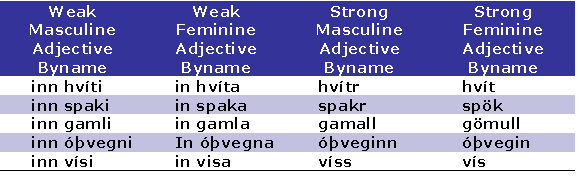
- Generally bynames consist of nouns, prefixes, weak adjectives, or strong
adjectives.
- An adjective in a byname must agree in gender with the gender of the
person being named. (Nouns usually agree as to gender, but not always.)
- After the definite article (inn or in) weak adjectives are used,
although they can also appear without the article.
- Strong adjectives do not appear with the definite article.
- If a noun is used as a prepended byname, it is most frequently in the
genitive plural.
|
|
33
|
- Locative, describing place of origin – most common type of byname after
patronymics
- Physical characteristics – third most common type of byname
- Occupation – fourth most common type of byname, includes titles of rank
- Habits
- Temperament
- Biographical – recalls a biographical event in person’s life
- Commemorative - named after family members, historical figures. If a child is named after a deceased
relative, but the personal name is quite common, they may also be given
the person’s byname.
|
|
34
|
- Locatives were the second most common type of byname, after patronymics.
(See http://www.s-gabriel.org/1919)
- Locatives only in use if you live somewhere other than the place named
in the locative
- Examples: in bareyeska (“woman from the Hebrides”), breiðdælski (“man
from Broad-Dale”), inn enski (“Englishman”), in flamska (“woman from
Flanders”), inn gauzki (“man from Gautland”), inn grenzki (“man from
Greenland”), inn norræni (“Norwegian”), á Englandi (“from England”), á
Írlandi (“from Ireland”), á Skotlandi (“from Scotland”), í Danmörk
(“from Denmark”), í Svipjóð (“from Sweden”), í Jórvík (“of York”)
|
|
35
|
- Requires a dative object.
- Used in locatives in connection with proper names of countries,
especially those ending in -land, for instance;
á Englandi, á Írlandi, á Skotlandi, á Bretlandi, á Groenlandi,
á Íslandi, á Saxlandi, á Vindlandi, á Viulandi, á Hálogalandi,
á Rogalandi, á Jótlandi, á Frakklandi, á Hjaltlandi,
á Jamtalandi, á Hvítramannalandi, á Norðrliindum, etc.
- Used in connection with other names of districts or counties: á Mæri, á
Vörs, á Ögðum, á Fjölum (all
districts of Norway). From Landnámabók á Myrum (in Iceland), á
Finnmörk, á Fjoni (a Danish island); but í Danmörk,
í Svipjóð.
- Used also before names of Icelandic farms denoting open and elevated
slopes and spaces (not too high, because then 'at' must be used), such
as -staðr, -völlr, -ból, -hjalli,
-bakki, -heimr, -cyri, etc.: i.e. á Þórisstöðum,
á Möðruvöllum, á Fitjum.
- Place-names in -nes or -fjörðr sometimes take á, sometimes í (in modern
usage always í).
|
|
36
|
- Requires a dative object.
- Used in connection with local names, denoting low land: -fjörðr (“firth
or inlet”); -dal (“dale”); -ey (“island”);
-holt, -skógr, Lundi (forested areas); -höfn (“haven”). i.e., í
Borgarfirði, í Vestfjürðum, í Laxárdal, í Hrappsey,
í Viðey, í Orkneyjum, í Suðreyjum, í Sauðeyjum,
í Trollaskógi, í Mörk, í Skálaholti, í Lundi, í Höfn,
í Kaupmannahöfn, í Hvammi, í Vestr-hópi, í Eyrarsundi,
í Fljótshlíð, í Vági, í Vík, í Ósi, í Elliðar-vik,
í Rögnvalds-vági, í Salteyrar-ósi, í Laxár-ósi, í Elfinni,
í Lóni, í Körmt, í Myl, í Storð (islands), í Víkinni, í Hólmi.
- Of towns, í Lundunum (“in London”); í Jórvík (“in York”),
í Túnsbergi, í Björgyn.
- Of countries, í Noregi (“in Norway”),
í Svíþjóð (“in Sweden”), í Danmörku (“in Denmark”),
í Austrriki (in the East)
|
|
37
|
- Requires a dative object.
- Used in connection with a person's domicile, especially denoting a man's
abode, and answering to á and í, the name of the farm (or country) being
added to proper names (as in Scotland) to distinguish persons of the
same name.
- Examples: Hallr af Síðu, Erlíngr af Straumey, Ástríðr af Djúpárbakka,
Gunnarr af Hlíðarenda (more usual frá), Þórir haklangr konungr af Ögðum
(king of Agdir)
|
|
38
|
- Requires a dative object. Modern spelling is að, but Viking Age
pronunciation was at and usually the spelling also.
- Denoting the kingdom or residence of a king or princely person; konungr
at Danmörk ok Noregi (king of Denmark and Norway), konungr at Dyflinni
(king of Dublin), but i Englandi or yfir Englandi. Also used of a
bishop; biskup at Holum (bishop of Hólar).
- In denoting a man's abode, at is used where the local name implies the
notion of “by the side of”, and is therefore especially applied to words
denoting a river, brook, rock, mountain, grove, or the like, and in some
other instances, “by, at”, e.g. at Hofi (a temple), at Borg (a castle), at
Helgafelli (a mountain), at Mosfelli, at Hálsi (a hill), at Á (river), at
Bægisá (river), at Fossi (a waterfall), at Lækjamoti (waters-meeting), at
Bergþórshváli, at Lundi (a grove), at Melum (sandhill). The preposition á
is now used in modern Icelandic in most of these cases.
|
|
39
|
- Requires a dative object.
- When this preposition is used with the names of hills, rivers, or the
like, meaning "from", at is more commonly used.
- Found occasionally in names; Eirekr frá Ósi, þórðr frá Höfða, frá
Mosfelli, frá Hlíðarenda.
|
|
40
|
- The most common type of descriptive byname is the comparison byname,
where the person is felt to resemble something in either appearance or
movement
- Comparison to animals is the most common type of byname in this
category, i.e., brimill (“large seal”), brúsi (“he-goat”), galti
(“boar”), hani (“rooster”), hjörtr (“hart, stag”), kettlingr
(“kitten”), kráka (“crow”), merr (“mare”), rostungr (“walrus”), etc.,
but also dúfunef (“dove nose”), geitleggr (“goat-leg”), kamphundr
(“whiskered dog”), ormstunga (“worm-tongue, serpent tongue”), selnasi
(“seal-nose”), etc.
- Comparison to inanimate objects also common, i.e., bíldr (“axe”), drafli
(“cooked curds”), drómundr (“a type of ship”), hatti (“hood, cowl”), karkr
(“stunted tree”), kváran (“shoe”), naddr (“nail, spike”), skökull
(“cart pole”), etc.
|
|
41
|
- Probably the next most common type of descriptive byname after physical
characteristics are those naming a person’s occupation, rank, or
activities.
- Titles and occupational terms are treated as bynames. They follow the
personal name, but precede any other bynames, i.e. Haraldr konungr inn
hárfagri (King Haraldr Fairhair)
- Examples: konungr (“king”), dróttning (“queen”), hertogi (“duke”), jarl
(“earl, count”), berserkr (“berserker”), skáld (“poet, skald”), ábóti (“abbot”),
bogsveigr (“bow-swayer, archer”), búandi (“farmer”), dróttseti (“king’s
steward”), gjaldkeri (“king’s treasurer”), góði (“chieftain”), hersir
(“chieftain”), kaupmaðr (“merchant”), knarrarsmiðr (“shipwright”), meistari
(“master, magister”), prestr (“Christian priest”), sjóna (“seeress”), smiðr
(“smith”), spákona (“prophetess”), stallari (“king’s marshall”), etc.
|
|
42
|
- After comparison bynames, bynames poking fun at a person’s habits are
most common.
- Examples: andvaka (“awake”), barnakarl (“child’s man, no killer of
children”), blígr (“staring, gazing”), dengir (“scythe-sharpener”), eldboðungr
(“fire-bidder”), inn fiskni (“good at fishing”), gapi (“yawner”), gjallandi
(“shrieking”), gnúpa (“crouch, stoop”), hófleysa (“excess,
intemperance”), karpi (“braggart”), ofsi (“arrogant, tyrannical”), inn
skjálgi (“squinting”), stígandi (“stepper, strider”), þausnir (“romper,
rager”), etc.
|
|
43
|
- Some bynames describe the person’s temperament and character.
- Examples: balli (“brave”), fasthaldi (“hold-fast, tenancious”), inn
friðsami (“peaceful”), inn glaði (“glad, happy”), inn harði (“hard,
stern, severe”), hryggr (“afflicted, sad, grieved”), inn illi (“evil,
bad”), jafnkollr (“even-mind, level-headed”), kali (“cold, unkind”), líknarlauss
(“merciless”), inn óði (“mad, frantic, raging”), etc.
|
|
44
|
- A biographical descriptive byname is based upon events in the life of
the person being named.
- Examples: Brennu- (“burnt, arson victim”), englandsfari (“traveler to
England”), Flugu- (“murderer”), hlymreksfari (traveler to Limerick,
Ireland), jórsalafari (“pilgrim to Jerusalem”), sundafyllir
(“sound-filler”, of a woman who used magic to fill a bay with fish)
|
|
45
|
- RFS III - COMPATIBLE NAMING STYLE AND GRAMMAR
- Compatible with the culture of a single time and place.
Mixing languages.
Registerable in certain cases, but not authentic. The handful of examples we have of
Norsemen being referenced in both Norse and Gaelic documents is a good
example. The name may have mixed
elements from different cultures, but it was written all in one
language.
“It is a common misconception that people whose parents came
from different countries would have names partly in one language and
partly in another. Unfortunately, that's not how medieval naming
worked. In the rare cases when
two people from different countries married, their children were named
according to the naming practices of the country where they lived. If
they moved from one country to another, they would either retain their
original names or use local equivalents.” (See http://www.s-gabriel.org/2150)
- Need at least two name components for registration
|
|
46
|
- RFS IV - OFFENSIVE NAMES
Why some bynames may bounce
- Collected Precedents on "Offensive"
http://www.sca.org/heraldry/laurel/precedents/CompiledNamePrecedents/Offensive.html
- If "Trixie la Tush" or "John Witchburner" were
ruled unregisterable due to offensiveness, will documentable Viking Age
bynames such as böllr (ball, glans penis), hnappraz (knob-ass), hokinrazi
(crooked-ass), meinfretr (stink-fart, harm-fart), viligísl
(lust-hostage) or völubrjótr (witch-breaker) be likely to pass?
- Occasionally, because the name appears in a language other than
English, some otherwise “offensive” terms are registered -- but don’t
count on it. It’s much better to
avoid possible slow-downs in the registration process and returns by
picking non-offensive bynames from the start.
|
|
47
|
- RFS V - NAME CONFLICT
Some suggestions for clearing a conflict.
- Conflicts can be cleared by adding a name component. A name with three name components is
clear of one with only two components, so adding an additional
identifier solves the conflict.
- Name + Patronymic - try adding a byname
- Name + Byname - try adding a patronymic
- Add a grandfather's name or a locative byname
- If a personal name has to be changed,
- Consider changing only one element in a two-element name
(i.e., instead of Steingrímr, try Steinþórr, etc.)
- Consider registering a documented diminutive form for the desired name
(i.e., try Grimsi instead of Grímr, etc.).
|
|
48
|
- RFS VI - PRESUMPTUOUS NAMES - Avoiding mythological elements
- While a number of O.N. names specifically use elements identical to
god-names, avoid name constructions that could be construed as claiming
the god’s identity, powers, or lineage from the god. Avoid names such as Þórir
lopteldsvaldandi (Thorir Lightning-Wielder) or Björn Heimdalarson.
- The Eddas are not good sources for documenting names for SCA
registration. Any name with Loki
or Fenris is just not going to be registerable.
|
|
49
|
- Order of name elements (arranged in order of frequency)
- personal name only
(i.e., Eiríkr)
- While this is the most common Old Norse name usage, the CoH requires
two or more name components for registration.
- personal name + patronymic
(i.e., Leifr Eiríksson, "Leif, son of Eric").
- personal name + byname + patronymic
(i.e., Eiríkr inn rauði Þórvaldsson, "Eric the Red, son of
Thorvald“ or Leifr inn heppni Eiríksson, “Leif the Lucky, son of Eric”)
- Note that a "byname" is like a nickname, it's not a middle
name. The Vikings did not use middle names or double given names
(See http://www.s-gabriel.org/1990)
- personal name + byname
(i.e., Eiríkr inn rauði, "Eric the Red“ or Leifr inn
heppni, “Leif the Lucky”)
|
|
50
|
- A review of the materials provided on the CD-ROM
- WWW Articles
- Access original article, print, and add to submission
- My articles cite original source of information, where to go to find
the original data
- Dictionaries and Bynames
- The intricate art of nuance
- Making sure invented bynames fit patterns of documented bynames
- To use dictionary as documentation, print scanned title page and
page(s) with entry(ies)
- Bibliographic Materials
- Using online college library catalogs to find sources
- Using Interlibrary Loan to find sources
- A Brief Note on the Few Mistakes in Geirr Bassi Haraldsson’s The Old
Norse Name
|

 Notes
Notes